

Seven Sales Management Skills That Separate Winners
A client once told me their KPIs were simple: reps had to book eight meetings a day.
I stopped him right there.
That’s not a KPI. That’s a minimum standard you’re calling a metric because you don’t actually know what a key performance indicator does.
This happens constantly. Managers think they’re tracking performance when they’re really just counting activity. They believe they’re coaching when they’re actually just supervising. They assume their best salesperson will make a great manager, then watch both the rep and the team struggle.
I’ve spent nearly 20 years building and scaling sales teams across North America. I’ve managed 136 reps simultaneously. I’ve seen the patterns that separate managers who consistently hit targets from those who constantly scramble.
The gap isn’t talent. It’s specific, learnable skills that most managers either skip entirely or execute wrong.
Here are the seven that matter most.
1. The Organization and Cadence Skill
Most managers show up unprepared and wonder why their team feels directionless.
Winning managers follow a framework I call Plan, Organize, Lead, Control.
Plan means you know exactly what you’re covering this week, each day, every meeting. Your team can see you’ve thought this through. You’re not winging it.
Organize means you’ve printed materials, prepared examples, lined up resources. When reps walk in, they know you’re ready to work.
Lead means you’re not telling people to make calls. You’re sitting with them, showing them how, listening to their calls, making example calls in front of them, pairing them with other leaders who can demonstrate the skill.
Control means you’re coming back to check the data. You’re talking to reps about what happened and what didn’t. You’re finding out what went the way you wanted and what needs adjustment.
Then you plan again.
This cadence creates predictability. Your team knows when training happens, when one-on-ones occur, when performance reviews take place. Consistent coaching cadences establish a structured pace that helps reps set goals, track results, and improve performance while giving you a firm grasp on business health.
Without this rhythm, you’re managing by reaction instead of system.
2. The Playbook Mastery Skill
Systems beat hope every time.
I can’t count how many managers send reps into the field after a training session, expecting them to remember everything. Reps retain maybe 10% of what you taught them. By day three, they’re making up their own process or freezing because they don’t know what to do next.
Winning managers document everything.
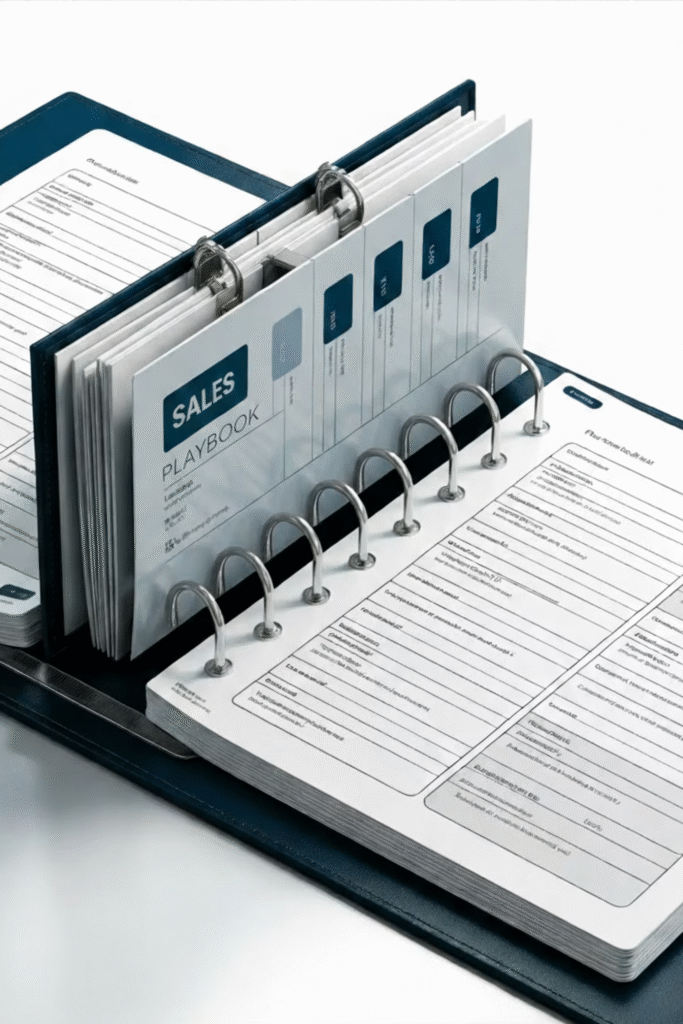
How do reps use your CRM? There’s a playbook for that. How do you handle objections? There’s a documented process with examples. What’s your prospecting system? Written down with scripts and video walkthroughs.
When a rep struggles, I can say: “Flip to page 23, there’s an example.” If they still don’t get it: “Watch this Loom video.” If they need to see it live: “Follow this rep around for an afternoon.”
We always reference the same proven process.
This isn’t about removing creativity. It’s about giving reps a foundation so they’re not inventing the wheel every single call. Even well-designed call cadences only work when you provide teams with training, coaching, and a library of proven scripts and templates optimized for different personas and buying stages.
Natural talent is great. Documented systems scale.
3. The Metrics That Matter Skill
When I managed 136 reps across Canada and the United States, managers would call me confused: “How do you know John needs help with scripting? Do you have spies in my office?”
No spies. Just proper KPIs.
Most managers track lagging indicators: deals closed, revenue generated, quota attainment. Those numbers tell you what already happened. They don’t tell you where the problem started or how to fix it.
Winning managers track leading indicators that predict outcomes before revenue appears.
Here’s what I watch: prospects added to CRM, calls made, connects achieved, appointments booked, appointments that actually showed, presentations delivered, follow-up meetings scheduled.
These metrics point backwards at the problem.
Say two reps both add 100 leads weekly and make 50 calls daily. One connects with 50% of prospects. The other connects with 10%. What does that tell you?
The low-connect rep is calling at the wrong time, prospecting bad lists, or targeting the wrong people. You know this before they miss quota.
Now say both reps connect with 20 people. One books seven appointments. The other books one. What’s the issue?
The low-booking rep needs script work. Maybe they’re not qualifying properly or presenting value clearly. You can fix this immediately instead of waiting for month-end numbers.
Leading indicator KPIs help you catch problems before they impact your bottom line. If a rep’s call volume drops, you can intervene before it shows up as missed quota.
KPIs aren’t just scorecards. They’re diagnostic tools that show you exactly where training needs to focus.

4. The Coaching Cadence Skill
Your 9-to-5 is for your team. Your 5-to-9 is for manager work.
Too many managers flip this. They spend their days in meetings and emails, then squeeze in a weekly one-on-one if they remember.
Winning managers structure their time around team development.
Minimum cadence: one structured one-on-one per week with each rep. Better cadence: daily quick check-ins, even if just a five-minute conversation.
“Here’s what I saw in your metrics yesterday. Here’s what we’re working on today. Where are you stuck?”
Weekly one-on-ones go deeper. You’re reviewing performance, identifying gaps, asking questions: “I see you’re hitting this number but missing that one. Where do you need help? Should we pair you with someone?”
Every pay period, I sit down and review commission. Where are you at? Are you heading toward your goals? This keeps compensation transparent and motivation high.
Monthly, that weekly one-on-one expands to cover the full month’s performance and next month’s targets.
Quarterly reviews with senior reps focus on leadership development if they want to move up.
And here’s the non-negotiable: daily skill-based training. Every single day, Monday through Friday.
This isn’t product training or industry knowledge. Those are important but separate. Daily training focuses on core sales skills: relating to prospects, handling objections, closing techniques, presentation skills.
At According to Plan Sales & Marketing, we run daily workshops. Tuesday is objection-handling day, every Tuesday, all year. Reps bring in objections that are beating them. As a team, we workshop three solid responses to each objection, then practice until they’re comfortable.
This rhythm builds skills systematically instead of hoping reps figure it out on their own.
5. The Talent Development Skill
Here’s the hard truth: your best salesperson will probably fail as a manager.
Research on the Peter Principle analyzed 214 American businesses and found that companies tend to promote employees based on current performance rather than managerial potential. High-performing sales reps were more likely to get promoted and more likely to perform poorly as managers. When a new manager’s pre-promotion sales doubled, their subordinates’ sales performance declined by 7.5%.
Selling and managing are completely different jobs.
I’ve seen rock-star salespeople who close deals effortlessly but can’t articulate what they’re doing. Ask them what went right in a meeting: “I don’t know, it just worked.”
That person can’t teach anyone.
Winning managers look for different signals when identifying future leaders.
I look for reps who show up early, help teammates, and can explain their process clearly. I look for people who practice skills obsessively.
I trained a young rep who sat through a noon workshop on objection handling. By 2:30 PM, he’d tried 36 different bounces in the field. He called me with clarification questions, went back out, and closed a deal that afternoon.
That’s leadership potential.
He didn’t know how to manage yet. But he understood systems, practiced deliberately, and could replicate the process. Once he mastered it, I could teach him to train others.
You don’t promote someone into management and hope they figure it out. You give them small teaching opportunities first. “Lead this workshop. Teach this person how to handle objections. Show me you can transfer this skill.”
If they can learn systematically and teach systematically, then you start grooming them for leadership.
6. The Meeting Rhythm Skill
Team meetings aren’t just for you to talk at people.
Winning managers create space for reps to learn from each other, not just from the manager.
Here’s my structure: Start with relating. Get everyone engaged. “How was your Monday? What’s happening this week?”
Then I teach the day’s skill. But here’s the key: I embed the technique into the meeting itself.
If I’m teaching the FORM method for relating (Family, Occupation, Recreation, Material), I’ll compliment reps on their watches, shoes, or trucks as they walk in. We chat about those material items for a few minutes.
Then I start the training: “Today we’re covering how to relate based on material surroundings.”
When I teach “a clients watch or phone” You see eyes light up. They realize I just demonstrated the exact technique on them. Even though they’re salespeople learning relating skills, they didn’t notice it happening.
That moment of clarity shows them their customers won’t notice either.
After I teach the framework, we workshop it together. I put the acronym on the board: “I gave you six family-related topics. Give me six more.”
The team contributes. We build the list together.
Then we practice pitch. Split into pairs, try using relating twelve times in a five-minute conversation. Make it real.
Finally, they get printouts to take with them. The rest of the day reinforces that skill. If it’s objection-handling Tuesday, I want people practicing bounces at 3 PM, at 5 PM, all day long.
This structure makes training stick because it’s experiential, collaborative, and immediately applicable.

7. The Performance Management Skill
Candidness is a kindness.
It took me years to learn this. If you don’t give clear feedback about what someone’s doing wrong, they can’t fix it. As the problem builds, they’ll resent you for watching them struggle without saying anything direct.
Winning managers address underperformance early with specific, honest feedback.
I use the sandwich method: positive, corrective, positive.
If a rep is swearing on customer calls, I don’t just say “stop swearing.” I start with something they did well in the conversation, address the swearing issue and why it hurts their credibility, then highlight other strengths before moving forward.
This keeps the conversation constructive instead of purely critical.
For serious performance issues, I put reps on a structured improvement plan with increased touchpoints. I’m talking to them every morning, checking in at lunch, debriefing at end of day.
That’s not punishment. It’s investment.
You’re giving them concentrated coaching and clear expectations. Either they improve with that support, or you both realize it’s not the right fit.
But you’re not leaving them guessing what needs to change.

The Pipeline Architecture Skill (Bonus)
Most pipelines are wishful thinking disguised as forecasts.
Managers count every opportunity equally: “We have $500K in pipeline, so we should close $250K this quarter at a 50% close rate.”
That math ignores reality.
Winning managers add heat to their pipeline: hot, warm, cold.
At the prospecting stage, hot prospects are people already buying what you sell (just from competitors). Cold prospects are names from a downloaded list.
After presentations, hot follow-ups are deals where both decision-makers loved it, showed buying signals, and you’re just waiting on timing. Warm follow-ups have blockers: one partner’s on board but the other isn’t, or they need a few weeks for someone to return.
Cold follow-ups are interested but way out: six months minimum, price is too high, or they might consider a different package later.
Now assign probabilities. Hot leads close at 70%. Warm leads close at 30-50%. Cold leads close at 10%.
Suddenly your forecast is accurate instead of optimistic.
You’re not counting a cold lead that might close in six months the same as a hot lead that’s signing next week. Your pipeline reflects reality, and your leadership team can actually plan around reliable numbers.
Clean pipeline, weighted probabilities, honest heat assessment. That’s how you turn forecasting from guesswork into science.
The Biggest Mistake
I see two fatal errors constantly.
First, managers lead by example too much. Their rep struggles to close, so they step in and close it for them. That feels productive in the moment. Long-term, it’s destructive.
You can close ten deals a week personally, or you can build five reps who each close two deals weekly. When revenue dips, that’s when you step in and add your five or ten deals on top of theirs.
Sometimes you have to lose a sale for a rep to learn from it.
Second, managers stop listening to their team. They’ve been in sales for 20 years, so they assume they know everything. But their reps are the ones having daily customer conversations. They’re hearing the real objections, the actual market conditions, the current buying patterns.
Good leaders speak last.
When you create space for your team to share what’s happening in the field, you get better training content and you show them you value their insight. Ego kills this. You need enough confidence to solve problems but not so much that nobody wants to work for you.
People quit managers, not companies.
The One Thing That Matters Most
If I could give one piece of advice to any sales manager, it’s this: get curious about what you don’t know.
You’re a new manager or a 20-year veteran. Doesn’t matter. You get put in a new industry or with a new team. You need to figure out what you don’t understand.
Maybe you don’t know the industry. That’s learnable. But you have to acknowledge you don’t know it and then investigate.
When ego gets big, we stop investigating. A manager with too much ego who isn’t curious about their gaps will still have those same gaps a year from now.
I’ve brought in experienced managers who couldn’t sell a $579 product to save their lives. They’d been successful in real estate or cars for 30 years. Put them in front of an intangible product at a community event, and they couldn’t close a door.
Why? They came in as know-it-alls. They weren’t ready to learn. They didn’t look at what parts of this process they didn’t understand.
They didn’t know how to sell intangible products. They didn’t know how to prospect at these types of events. So they failed.
Ask yourself: What do I know I don’t know?
What don’t I know that I don’t know?
Then go learn it.
That curiosity, that self-evaluation, that willingness to admit gaps and fill them? That’s what separates managers who plateau from managers who keep getting better.

What to Do This Week
Pick one skill from this list. Just one.
If your KPIs are actually just activity minimums, rebuild them as diagnostic tools. Track connects, not just calls. Track show rates, not just appointments booked.
If you don’t have documented playbooks, start with one process. Write down your objection-handling framework. Record a video walkthrough. Give reps something to reference.
If you’re not doing daily skill training, block 30 minutes every morning. Pick one skill per day. Teach it, workshop it, practice it.
If your pipeline is wishful thinking, add heat categories this week. Tag every deal as hot, warm, or cold. Assign realistic close probabilities. Watch your forecast accuracy improve immediately.
These skills aren’t theoretical. They’re practical systems that create measurable results.
The gap between mediocre managers and winning managers isn’t talent or experience. It’s whether you’re actually doing these seven things correctly.
Most managers aren’t.
Now you can be the exception.